When Your Business Outgrows Its Website: What to Look for Next
Last updated: 2026-09-03
As your business grows, your website needs to grow with it. Discover what to look for in a scalable platform, from performance to SEO and functionality.
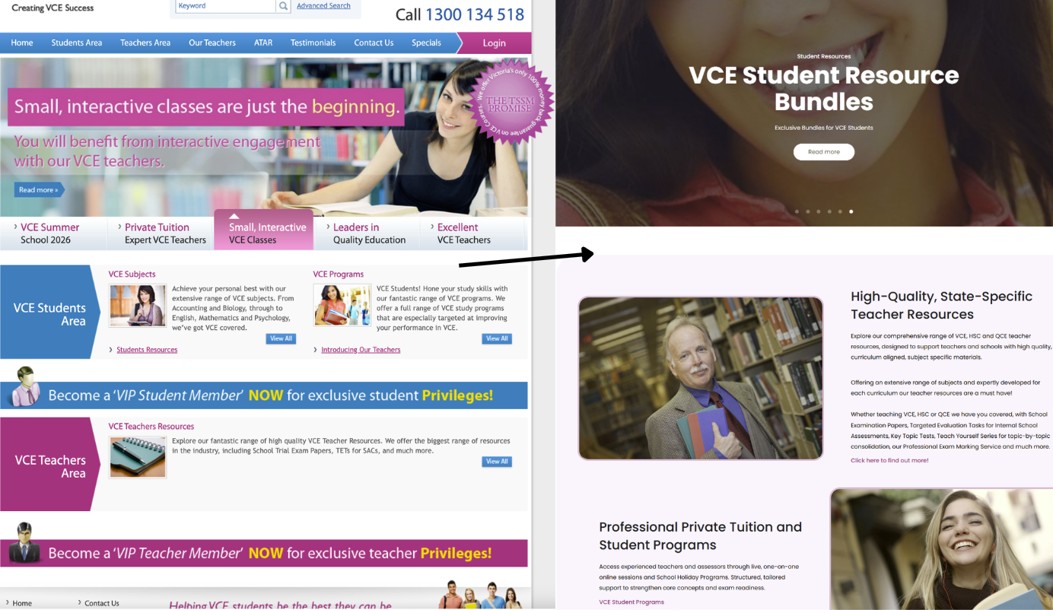
As a company grows, its customers change, its services expand, its branding develops and its marketing becomes more sophisticated. The website that once did everything the business needed can eventually become difficult to update, restrictive to redesign and incapable of supporting where the business is heading.
This is often the point where businesses start asking an important question:
Do we improve the existing website, or is it time to move to something built for the next stage of the business?
For growing businesses, this decision should be about more than getting a new design. The next website should provide the flexibility, performance and functionality needed to support the business for years to come.
What Does It Mean to Outgrow Your Website?
Outgrowing a website does not necessarily mean the website is old or unattractive, a website can look professional and still be holding a business back.
Businesses often outgrow their website when:
- The CMS has become difficult to manage
- Adding new functionality requires extensive development
- The existing design no longer reflects the brand
- The website cannot accommodate new services or audiences
- Mobile performance has fallen behind expectations
- SEO improvements are restricted by the platform
- Marketing teams cannot make updates efficiently
- The website has become dependent on plugins or third party tools
- The platform cannot scale with increasing content or traffic
- Different parts of the business require different customer journeys
For example, a company that originally operated in one market may eventually serve corporate clients, regional customers, metropolitan markets and specialist industries.
The website now needs to communicate all of those audiences without becoming confusing or generic. That is a business growth problem, not simply a web design problem.
Your Website Should Reflect Where Your Business Is Going
One of the biggest mistakes businesses make is designing their next website around where they are today.
A new website should consider where the company is heading. If a business is expanding into new markets, adding services or targeting larger customers, the website needs to be capable of representing that growth.
This means thinking beyond the homepage.
Consider:
Who are you trying to attract?
A growing business may need separate customer journeys for corporate decision makers, consumers, suppliers, regional customers or industry specific clients.
What are you trying to communicate?
Your website may need stronger brand positioning, professional photography, video, animation, case studies and more sophisticated content.
What will you need in the future?
New services, locations, integrations, calculators, booking systems, customer portals and other functionality may eventually become part of the website.
The right platform should give you room to grow into these requirements rather than forcing another rebuild every few years.
Design Scalability Matters Too
Scalability is often associated with servers, traffic and technical infrastructure.
But design scalability is just as important.
A website might look excellent with five pages. What happens when the business grows to 50?
- Can the same design system accommodate new services?
- Can new locations be added without creating inconsistent layouts?
- Can different industries or customer groups have their own pages?
- Can the website introduce new visual elements without looking disconnected from the rest of the brand?
This is particularly important for established businesses undergoing a rebrand or repositioning.
The next website may need to combine high quality imagery, video, distinctive typography, dynamic graphics and different visual environments while maintaining a consistent brand identity.
The design needs to be flexible enough to grow without becoming repetitive.
Your CMS Should Not Become the Bottleneck
A website can have an excellent front end while the CMS behind it becomes increasingly frustrating. If every small change requires a developer, your website can quickly become inefficient to manage.
A scalable CMS should allow internal teams to make routine updates while still providing developers with the flexibility to implement more advanced changes when required.
Consider:
- How easily can new pages be created?
- Can content be updated without technical knowledge?
- Can different sections of the website be managed independently?
- Can new functionality be added?
- Can the CMS support multiple websites or business divisions?
- Can the platform accommodate future integrations?
- How much does the business rely on plugins or third party extensions?
The CMS should support the business rather than dictate what the business can do.
Look Beyond the Website Design
When upgrading a website, it can be tempting to focus almost entirely on appearance.
A modern website should certainly look professional, but design is only one part of the equation.
Businesses should also consider the foundations underneath it.
Performance
Large images, unnecessary code, plugins and inefficient hosting can all affect website performance.
A scalable website should be built with performance in mind from the beginning.
SEO
SEO should not be added as an afterthought.
Website structure, page hierarchy, internal linking, technical performance and content management can all influence organic search performance.
If a business is investing in SEO, the website needs to support that investment.
Mobile Experience
Your website needs to work across different screen sizes and devices, not simply look good on a desktop computer.
For many businesses, mobile visitors represent a significant portion of their potential customers.
Security and Maintenance
A growing business needs confidence that its website can be maintained securely and updated as requirements change.
A platform that depends heavily on outdated plugins or unsupported components can create unnecessary risks.
What Google Looks For in Website Performance
Website performance is more than simply making a website load quickly. Google considers several signals that help determine how effectively a website delivers a fast, stable and user friendly experience.
One of the key areas is Core Web Vitals, which measure aspects of real world user experience, including:
Largest Contentful Paint (LCP): How quickly the main content becomes visible.
Interaction to Next Paint (INP): How responsive the website is when users interact with it.
Cumulative Layout Shift (CLS): How stable the page remains while loading, without unexpected movement.
Google also considers factors such as mobile usability, page experience, HTTPS, responsive design and overall technical performance when evaluating websites.
For businesses competing for valuable search positions, these technical foundations matter. A website that is slow, difficult to use or unstable can create a poor experience for visitors and make it harder to maximise the value of your SEO investment.
Custom Website Development Can Remove Platform Limitations
For some businesses, an off the shelf platform remains perfectly suitable, for others, the limitations become increasingly obvious as the organisation grows.
This is where custom web development can provide a different approach.
Instead of selecting a platform first and then designing the business around its capabilities, a custom website allows the development process to begin with the business requirements, customer journey and long term objectives.
At IT BOOST Australia, our in house custom web engine gives us greater control over the way a website is designed, developed and managed.
This allows us to build around specific requirements, from sophisticated visual designs and custom functionality through to SEO, performance and flexible content management.
The objective is not to make every website unnecessarily complicated.
It is to ensure the technology is appropriate for what the business actually needs.
Build Your Next Website Around Your Business
If your website has become difficult to manage, no longer reflects your brand or cannot support where your business is heading, it may be time to look beyond another redesign.
At IT BOOST Australia, we approach website development from a business perspective, combining custom web design, development, SEO and performance to create websites designed around your current requirements and future growth.
Your business has evolved, and your website should be ready to evolve with it.
Disclaimer
This article is provided free of charge for public information. We do not guarantee, and accept no legal liability for, the accuracy, reliability, currency, or completeness of the content or any linked material. Users should apply their own judgment and verify the material’s relevance to their needs. This article is a general summary and not a substitute for legal or professional advice. Users should seek appropriate advice for their circumstances. Any third-party views expressed do not necessarily reflect ours or imply endorsement.
Terminologies used in this article
- Brand Identity
- Brand identity is the collection of visual and messaging elements that represent a business, including its logo, colours, typography, tone of voice, and overall style. A consistent brand identity helps businesses build recognition and trust.
- Code
- In web development, code refers to the programming languages and instructions used to build and operate a website. Well-written code can improve website performance, security, and maintainability.
- Customer Journey
- A customer journey is the path a person takes when interacting with a business, from their first visit through to completing a desired action such as making a purchase or submitting an enquiry. A well-designed website helps guide users smoothly through each stage of this journey.
- HTTPS
- HTTPS (Hypertext Transfer Protocol Secure) is the secure version of HTTP. It encrypts data transmitted between a website and its visitors to improve security and user trust.
- Mobile Usability
- Mobile usability refers to how easy a website is to use on smartphones and tablets. A website with good mobile usability provides clear navigation, readable content, and a smooth browsing experience across different screen sizes.
- SEO
- SEO is the process of optimising your website to make sure it is available to Google Search Engine and this can be monitored through Google Search Console. By optimising website content, structure, and technical performance, businesses can attract more organic (unpaid) traffic and increase their onl…
- Website Performance
- Website performance refers to how efficiently a website loads, responds, and functions for users. Factors such as page speed, stability, and responsiveness all contribute to overall website performance.